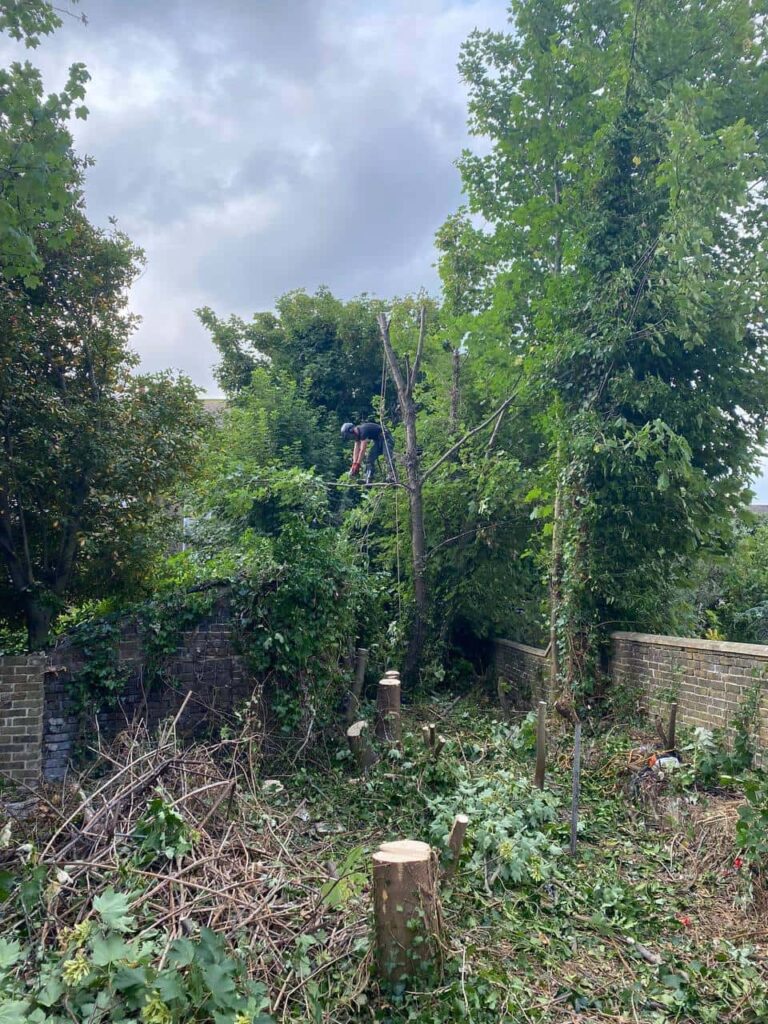
Trees can add maturity, character and natural interest to a garden, but their relationship with a property can change considerably as they grow. A tree that was once comfortably positioned away from the house may eventually develop branches that extend towards the roof, windows, gutters or exterior walls. As the canopy becomes larger, homeowners may understandably begin wondering whether the tree has become too close and what should be done about it.
Tree removal is not automatically necessary simply because a tree is growing near a building. In many situations, professional tree surgery can manage problematic growth while retaining the tree as an established feature of the garden. For property owners in Worlingworth, Suffolk, Worlingworth Tree Surgeons can assess the tree, its position and its growth before recommending appropriate work.
Why Trees Can Become a Problem as They Mature
The relationship between a tree and a house is not fixed. Trees continue developing in height and spread, sometimes for many years.
As the canopy expands, branches may gradually begin to:
- Extend across the roof
- Grow towards windows
- Overhang gutters
- Brush against exterior surfaces
- Reduce clearance around the property
- Shade significant areas of the house or garden
- Restrict access around buildings
What matters is not simply how close the trunk is to the property, but how the complete tree is developing within the available space.
Overhanging Branches Can Often Be Managed
Branches extending towards or over a property are one of the most common reasons homeowners seek professional tree surgery.
Where the tree is otherwise suitable for retention, selective pruning may be able to create greater separation between the canopy and building.
The aim is not necessarily to remove every branch growing towards the house. Instead, a tree surgeon can identify which parts of the canopy are causing practical problems and determine how they can be managed while preserving an appropriate overall structure.
Crown Reduction May Help Control an Expanding Canopy
Where a tree has become too large for the space around it, crown reduction may be considered.
Crown reduction involves carefully reducing the height and/or spread of the canopy while maintaining an appropriate natural shape. Rather than indiscriminately shortening branches, pruning is planned around suitable growth points and the structure of the tree.
Where appropriate, crown reduction can help:
- Reduce excessive canopy spread
- Increase separation from the property
- Manage long or overextended branches
- Bring the tree into better proportion with its surroundings
- Reduce the dominance of an oversized canopy
Not every tree requires or is suitable for the same degree of reduction, which is why individual assessment is important.
Selective Pruning May Be All That Is Needed
Sometimes the tree itself is not too large. Only particular branches may be creating concern.
For example, one side of the crown might be extending towards the roof while the remainder of the canopy fits comfortably within the garden.
Selective pruning can address specific branches without unnecessarily reducing the entire tree.
This targeted approach can be particularly useful where the objective is simply to restore sensible clearance around the property.
Branches Touching the Roof Should Be Assessed
Branches growing directly against roofing materials should not simply be ignored.
Movement during windy conditions can cause branches to repeatedly contact tiles, slates, gutters or other exterior components. Overhanging trees can also deposit leaves, twigs and other natural debris onto the roof.
Appropriate tree cutting can increase separation and reduce direct contact while retaining healthy parts of the canopy wherever possible.
Early management is generally preferable to waiting until branches have become substantially larger and more difficult to accommodate.
Tree Surgery Can Improve Clearance Around Gutters
An expanding canopy close to a house can contribute to significant amounts of organic debris collecting around gutters.
Leaves, seeds and small twigs naturally fall from trees throughout the year. Where branches extend directly above the roofline, much of this material may land on the property.
Tree surgery cannot prevent a tree from naturally shedding material, but sensible canopy management may reduce excessive overhang where it has become inappropriate for the available space.
Low Branches Can Restrict Access Around the Property
Trees positioned beside homes can also develop lower branches that interfere with paths, entrances or other frequently used areas.
Where appropriate, crown lifting may be used to increase clearance beneath the lower canopy.
This involves selectively removing suitable lower branches while considering the structure and appearance of the tree.
It can help improve:
- Pedestrian access
- Visibility
- Clearance around paths
- Usability of nearby garden areas
- The relationship between the canopy and surrounding features
Again, the work should be proportionate to the individual tree.
Excessive Shade Can Sometimes Be Managed
A large tree growing close to the property may cast substantial shade over windows, gardens and outdoor living areas.
Shade is a natural benefit of trees, but as the canopy becomes larger or denser, the level of shading may exceed what homeowners originally expected.
Depending on the tree and its condition, carefully planned pruning may help improve the relationship between the canopy and surrounding space.
The objective should not be to remove excessive amounts of healthy growth purely to maximise sunlight. Instead, professional tree surgery seeks a balanced result that considers both the tree and the property.
Dead or Damaged Branches Need Separate Attention
A tree growing close to a house deserves particular attention if dead, damaged or broken branches are present within the canopy.
Tree surgery may involve removing unsuitable branches as part of broader canopy management.
Potential warning signs include:
- Dead branches
- Broken limbs
- Hanging sections
- Split branches
- Unusual changes within the canopy
- Recently fallen branches
A professional assessment can establish which parts of the tree require attention rather than relying on observations made solely from ground level.
Why Simply Cutting Back the Property Side Can Be a Poor Approach
When branches are growing towards a house, it may seem logical to cut everything back heavily on that side.
However, excessive one-sided pruning can affect the balance and appearance of the canopy.
Professional tree surgery considers the whole tree.
The position of each branch, the tree’s natural form and its likely future growth should all influence where cuts are made. The objective is to create suitable clearance without leaving the tree unnecessarily unbalanced.
Future Growth Should Be Part of the Decision
Tree surgery should not focus only on where branches are positioned today.
A relatively small branch growing towards a building may become substantially larger over time. Equally, the tree’s response to pruning can influence the type of future growth that develops.
Professional planning considers:
Tree species
Different species grow and respond to pruning differently.
Age and condition
Young, mature and declining trees may require different approaches.
Canopy structure
Branch arrangement influences which pruning work is suitable.
Available space
The tree needs to be considered in relation to the house and surrounding garden.
Future management
Some trees close to properties benefit from periodic maintenance rather than occasional severe pruning.
This longer-term approach can help keep the tree more compatible with its surroundings.
Regular Tree Surgery Can Prevent the Canopy Becoming Unmanageable
Where a tree is suitable for retention but naturally develops towards a nearby property, periodic professional maintenance can be valuable.
Managing growth gradually may help maintain appropriate clearance without waiting until substantial intervention is required.
Depending on the individual tree, ongoing management might involve:
- Selective branch pruning
- Crown reduction where suitable
- Crown lifting
- Deadwood removal
- General reshaping
The correct approach depends entirely on the tree and its location.
When Might Tree Removal Need to Be Considered?
Professional pruning can solve many problems involving trees growing close to properties, but it is not always the appropriate answer.
A tree may sometimes be poorly suited to its location, significantly deteriorated or affected by issues that cannot reasonably be managed through pruning alone.
In these situations, removal may need to be considered.
However, proximity to a house does not by itself mean that a tree should be felled. A professional assessment can determine whether appropriate tree surgery can retain the tree while resolving the specific concerns.
Why Professional Assessment Matters
Looking at a tree from the ground can show where branches are growing, but it does not necessarily provide enough information to determine the correct work.
A professional tree surgeon can consider:
- Tree condition
- Branch structure
- Canopy size
- Problematic growth
- Clearance from the property
- Dead or damaged branches
- How the tree may respond to pruning
This allows work to be planned according to what the tree genuinely requires rather than simply removing large amounts of growth.
Professional Tree Surgery in Worlingworth
At Worlingworth Tree Surgeons, we provide professional tree surgery throughout Worlingworth, Suffolk, tailored to individual trees and their surroundings.
If a tree has gradually grown towards your home, roof, windows, paths or other parts of the property, we can assess how the canopy is developing and recommend appropriate work.
Our focus is on managing trees carefully and proportionately, retaining healthy established trees where suitable while helping homeowners maintain practical clearance around their properties.
Conclusion
Tree surgery can often help when a tree is growing too close to a property. Selective pruning, crown reduction, crown lifting and the removal of unsuitable branches can all help create greater clearance while preserving the tree’s natural structure where appropriate.
The important point is that every tree should be assessed individually. Heavy cutting is not automatically the best solution, and a tree does not necessarily need removing simply because its canopy has begun extending towards a building.
For property owners in Worlingworth, Suffolk, Worlingworth Tree Surgeons provides professional tree surgery focused on managing trees according to their condition, position and future growth. If a tree is beginning to feel too close to your property, contact our team to arrange an assessment and discuss the most appropriate way to manage it.
Call us on: 01728 448 695
Click here to find out more about Worlingworth Tree Surgeons
Click here to complete our contact form and see how we can help with your tree needs.