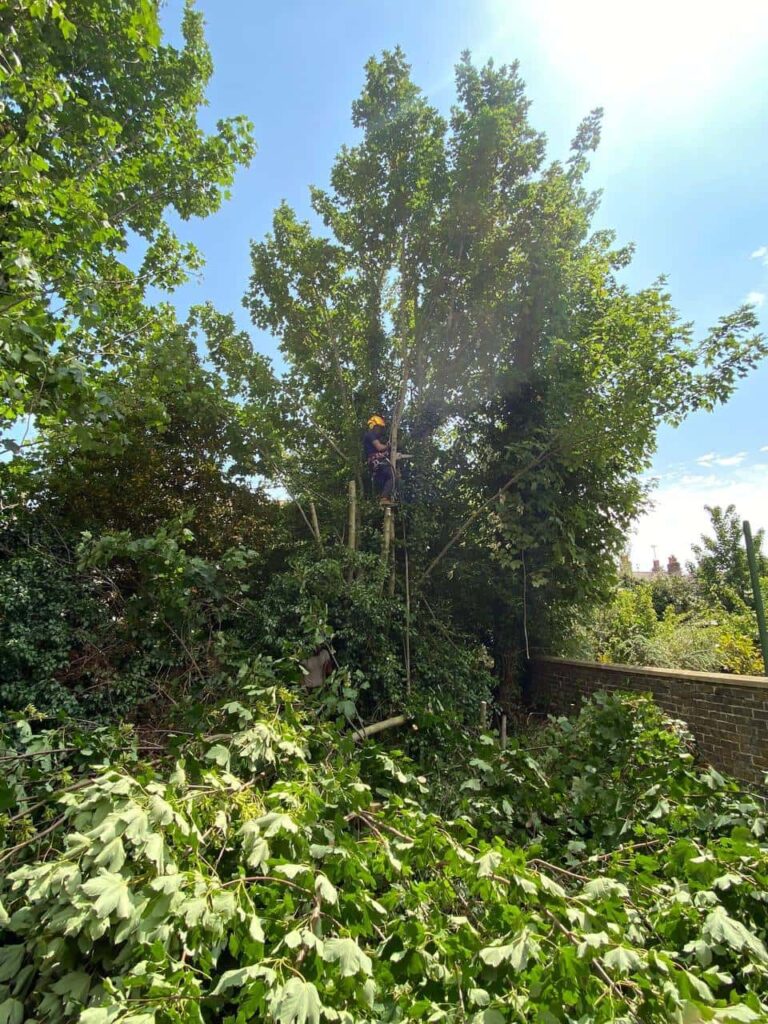
When Should You Consider Professional Tree Care?
Healthy, well-managed trees can provide shade, structure and natural character within a garden. However, trees are living organisms whose condition changes over time. Unbalanced growth, dead branches, restricted space and signs of decline can all indicate that professional attention is needed.
Recognising problems early can make it easier to choose an appropriate form of tree surgery. For property owners in Worlingworth, Suffolk, the following ten signs may suggest that a tree should be professionally assessed.
1. Dead or Dying Branches Are Appearing
Dead branches may become brittle and gradually lose their ability to remain securely attached. Warning signs include missing leaves during the growing season, peeling bark, visible cracks and twigs that snap easily.
Professional tree surgery can remove deadwood while preserving healthy growth. An assessment can also determine whether branch death is isolated or connected to a wider problem affecting the tree.
2. Branches Are Overhanging Buildings or Garden Areas
Branches growing close to a roof, outbuilding, path or frequently used seating area may become increasingly unsuitable as they lengthen and gain weight. Contact between branches and roofing materials can also cause avoidable wear during windy conditions.
Selective pruning may create suitable clearance while retaining the tree’s natural form. The work should be carefully planned to avoid removing more growth than necessary.
3. The Crown Has Become Too Dense
A dense crown can restrict light and reduce airflow through the canopy. It may also conceal dead, crossing or poorly formed branches.
Crown thinning or selective pruning can improve the canopy’s structure without unnecessarily reducing its overall size. The appropriate approach will depend on the species, maturity and condition of the tree.
4. The Tree Has Developed an Unbalanced Shape
Trees can become unbalanced when growth is concentrated on one side. This may happen because of nearby structures, competition for light, previous damage or unsuitable pruning.
An uneven canopy does not automatically mean a tree is unstable, but it should be assessed if large limbs are extending heavily in one direction. Professional pruning can sometimes reduce excessive weight and encourage a more balanced structure.
5. Branches Are Crossing or Rubbing Together
Crossing branches can rub against one another as they move in the wind. Over time, this friction may damage the bark and expose the underlying wood.
Removing a carefully selected branch can prevent further damage while preserving the stronger growth. Early intervention is often preferable because smaller pruning cuts generally create less disruption for the tree.
6. The Tree Is Blocking Too Much Natural Light
A large or dense canopy can leave significant parts of a garden in persistent shade. It may also reduce natural light reaching nearby windows.
Crown lifting, thinning or reduction may improve light levels, depending on the tree’s structure and position. Tree surgery should aim to create a practical improvement while retaining enough foliage to support the tree’s health.
7. Branches Are Growing Too Close to Other Trees
Trees growing close together may compete for light and space. Their branches can become crowded, intertwined or distorted as each canopy develops.
Professional assessment can establish whether selective pruning would create healthier separation or whether one tree is suppressing another. The aim should be to manage the relationship between the trees rather than simply cutting back every overlapping branch.
8. The Tree Has Changed Suddenly
Sudden changes deserve attention, particularly if a tree begins leaning, develops large cracks, loses a substantial branch or shows rapid canopy decline. Fungal growth around the trunk or roots can also indicate that further investigation is appropriate.
Some changes are harmless or seasonal, while others may be linked to structural weakness or declining health. A professional inspection can distinguish between them and determine whether tree surgery is suitable.
9. Previous Pruning Has Produced Weak Regrowth
Unsuitable pruning can lead to clusters of fast-growing shoots, large wounds or an unnatural crown structure. These new branches may be less securely attached than the original growth.
Corrective tree surgery may help improve the canopy gradually. Restoring a poorly pruned tree often requires a considered approach rather than removing a large amount of growth in one visit.
10. A Stump Is Restricting Use of the Garden
A remaining stump can obstruct mowing, planting, landscaping or the creation of a more usable garden layout. It may also produce new shoots, depending on the tree species.
Stump grinding reduces the stump below the surrounding ground level and removes much of the immediate obstruction. The resulting area can then be considered for an appropriate new use once the ground has settled.
Why a Professional Assessment Matters
Different tree problems can produce similar visible symptoms. Sparse foliage, for example, may result from seasonal conditions, root disturbance, disease or natural ageing. Excessive pruning based only on appearance can weaken a tree rather than improve it.
A professional assessment considers the tree’s species, position, condition and relationship with the surrounding garden. This allows the most suitable service to be identified, whether that involves pruning, crown reduction, deadwood removal, stump grinding or simply continued monitoring.
Conclusion
Dead branches, dense growth, crossing limbs, poor balance and sudden structural changes are all signs that a garden could benefit from professional tree surgery. Stumps and overgrown canopies can also restrict how comfortably the outdoor space is used.
Tree work should respond to a genuine need and preserve healthy growth wherever practical. If you have concerns about a tree in your Worlingworth garden, Worlingworth Tree Surgeons can assess its condition and recommend a suitable course of action without suggesting unnecessary work.
Call us on: 01728 448 695
Click here to find out more about Worlingworth Tree Surgeons
Click here to complete our contact form and see how we can help with your tree needs.